As of September 2025, India’s electric vehicle and battery manufacturing ecosystem has entered a decisive expansion phase. Large-scale battery cell and component plants in Gujarat, including facilities around Ahmedabad, Sanand and Bharuch, have either begun operations or are in advanced commissioning stages. These plants are focused on lithium-ion cells, battery packs and key materials such as electrolytes and cathode components, significantly reducing reliance on imports that previously dominated India’s EV supply chain.
On the export front, August–September 2025 marked a turning point, with electric vehicles manufactured in Gujarat shipped in commercial volumes to Europe and other overseas markets. Automakers operating from western India have started exporting fully built electric cars and SUVs to more than a dozen countries, positioning India as a cost-competitive production base for global EV markets. Industry estimates indicate that export-oriented EV production from India is expected to scale further through 2026, supported by improving battery localization.
Investment momentum has also strengthened during 2025, with domestic conglomerates and international financial institutions backing battery manufacturing and materials projects. New capital commitments announced between June and September 2025 target battery cell capacity, advanced chemistry development, and localized production of inputs that were earlier sourced from China and South Korea. These investments are expected to create a more stable and vertically integrated EV manufacturing ecosystem within the country.
At the same time, supply-chain risks have influenced policy and industry decisions throughout 2025. Restrictions and price volatility in critical minerals and rare-earth materials have accelerated efforts toward battery recycling, alternative sourcing, and domestic processing. As these measures take shape, India’s EV and battery sector is increasingly geared to support both domestic demand growth and sustained exports to over 100 international markets in the coming years.
Despite much smaller in scale compared to China, India has carved its place on clean energy map and is there to because of its robust policy push. It is moving from promise to scale. According to UNFCCC and Ministry of New and Renewable Energy, Indian government has set clear goals – notably to reach about 50% of installed power capacity from non-fossil sources by 2030 and to achieve net-zero by 2070. Its renewables build up is real. The cumulative solar about 119 GW and wind about 52 GW it is geared to meets its target of 170 GW and large renewables on the ground. That steady capacity growth, plus policy nudges, means independent trackers now say India is on track to meet or even exceed the conditional parts of its 2030 pledges if current momentum continues.
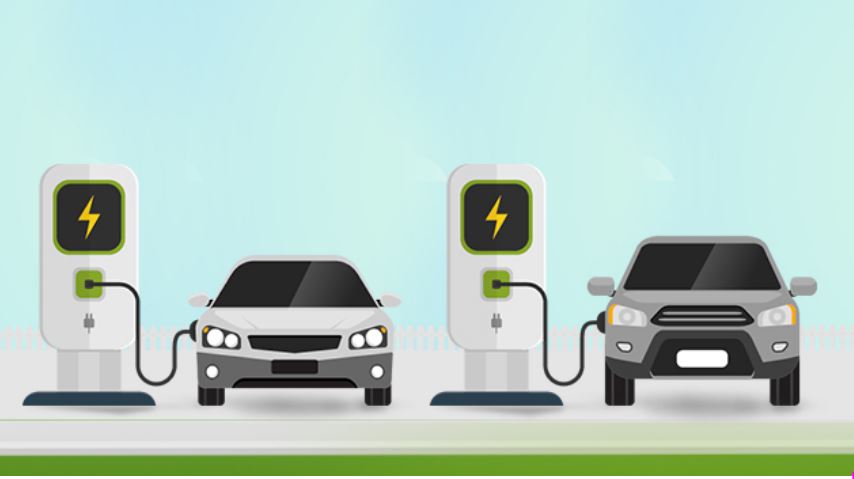
What changed this summer is that India is not only adding green electrons, it is starting to make and move green vehicles and key battery parts: the government announced home-grown BEV (big electric vehicle) exports, the e-VITARA. A Toshiba-Denso-Suzuki JV has begun production of hybrid battery electrodes in Ahmadabad. Electrode is a key battery component that carries large cost and supply-chain weight. At the same time the state has earmarked funds to roll out thousands of public chargers, 9,332 to be precise. which add to already installed 8,885. The supply chain, production and basic charging infrastructure are all being pushed at the same time. These are concrete building blocks that push India from policy statements into industrial and consumer reality.
China is still a leader and dominates battery manufacturing, raw material processing and charging roll-out. Recent industry trackers show China recovering the top spot in global lithium-ion battery supply-chain ranking. China also added millions of chargers last year, China’s 2024 additions included around 830,000 public chargers plus millions of private points. Compare this with India’s 18,000 something. For sheer volume of cells, chargers and OEM output, China is far ahead. That means China sets the price and availability rhythm for batteries worldwide.
The United States has strong markets and fast networks but remains weaker in battery manufacturing and quality. The US is building a large public fast-charging network and has strong demand and software, ecosystem play in shape of fleet electrification, charging operators, and financing. But it still imports most battery cells and active materials; domestic cell capacity is growing but has not yet touched China’s scale. But the strength of the US is market demand, capital and grid investment, rather than cheap, high-volume cell manufacturing.
European Union has a robust policy muscle and automaker transformation but its reliance on imports is still substantial. EU pushes stringent CO₂ rules and its automakers are rapidly electrifying fleets. It scores high on regulation, EV sales share in some markets, and charging policy. But like the US, Europe depends heavily on Asian supply for battery cells and precursor materials, even while it builds local cell plants.